Kitchen note
The Art of Flower Arranging
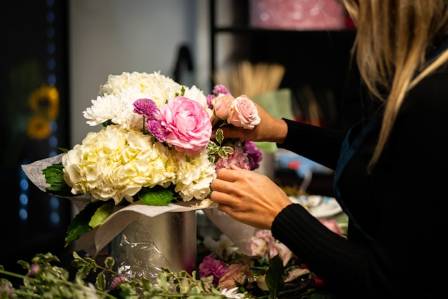
A beautiful vase of flowers often involves much more thought than it appears. Floral arranging is not simply a matter of putting random stems into a container. It requires an understanding of how shape, color, proportion, and empty space interact so the flowers create a clear visual impression.
Nina Parker
Cook
Bench note
The full story and useful tips are below.
Shelf
Plant kitchen
A beautiful vase of flowers often involves much more thought than it appears. Floral arranging is not simply a matter of putting random stems into a container. It requires an understanding of how shape, color, proportion, and empty space interact so the flowers create a clear visual impression.
You do not need to be a professional florist to benefit from learning a few basic arranging methods. Once you understand the fundamentals, you will begin to notice how even small adjustments can completely change the appearance of a bouquet.
Here are several simple techniques that can help you create arrangements that feel balanced, natural, and intentional without making the process complicated.
Begin With a Plan Instead of Guessing
Many people simply pick up their flowers and begin putting stems wherever they seem to fit. Sometimes that works, but having a basic idea beforehand usually produces better results. First decide what kind of arrangement you want. It might be tall and narrow, rounded, wide and spreading, or compact enough to sit comfortably on a table.
Once the overall shape is established, choosing and positioning the flowers becomes much easier. This is also an approach professional florists use when developing floral designs for events. They first consider where the arrangement will be displayed, whether that is a desk, dining table, entrance area, or room corner.
Planning does not have to be complicated. A simple vision helps you determine which flowers belong in the arrangement and which ones may not work with the intended shape.
Select a Focal Point
Every successful design needs an area that attracts attention first. In a floral arrangement, this is known as the focal point. It could be a particularly large flower, a small group of blooms, or even a contrasting color that naturally catches the eye.
There is no need to make the focal point overly elaborate. Simply select one feature that stands out slightly from everything else. Without a clear center of attention, all the flowers can compete visually, leaving the arrangement looking ordinary rather than purposeful.
A prominent bloom surrounded by smaller flowers gives the bouquet structure and creates a sense of visual calm.
Create Color Balance
Color has a major influence on how an arrangement looks and feels. Using too much of a single shade can make the bouquet appear dull, while combining too many strong colors can make it feel chaotic.
A simple approach is to combine several gentle shades with one or two stronger colors for contrast. This introduces dimension without making the arrangement excessively bright.
Working with an odd number of colors can also be helpful. Combinations of three or five shades often feel more natural than using two or four. Consider the intensity of each color as well. Pairing lighter and deeper tones can create a more balanced and visually interesting bouquet.
These straightforward color techniques can make even a simple collection of flowers appear thoughtfully designed.
Add Height and Depth
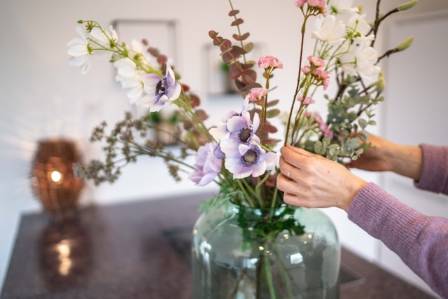
An arrangement with every flower at the same level can appear somewhat flat, especially when viewed in person. Introducing different heights and angles gives the bouquet greater dimension.
Place taller stems toward the center or rear, then allow some flowers to lean gently toward the front. The arrangement does not need to be perfectly symmetrical. In fact, varying the stem lengths and directions can make it feel more natural.
Creating different levels also makes the bouquet appear fuller without requiring additional flowers. Sometimes changing the angle of just one stem is enough to transform the entire composition.
As you practice, you will begin to understand that empty space is also an important part of floral design. It does not always need to be filled.
Incorporate Different Textures
Texture brings another layer of visual interest, even when your color palette is simple. Combine delicate, smooth petals with flowers that have rougher surfaces, or contrast broad leaves with narrow foliage.
Small differences can make a surprisingly large impact. For example, placing unopened buds beside fully developed blooms creates variation and makes the arrangement feel more complete.
You can also introduce natural materials such as branches, herbs, or other greenery. A floral arrangement does not have to consist entirely of conventional flowers. The key is to create enough variety to prevent everything from looking identical.
Different textures give the bouquet a layered appearance, even when only a handful of stems are used. When you are uncertain about how to combine these elements, an experienced florist can help turn your ideas into a polished and expressive arrangement.
Allow the Arrangement to Stay Loose
An arrangement that is perfectly packed and controlled may initially look impressive, but excessive perfection can quickly make it feel stiff. Allowing the stems some freedom often creates a more relaxed and natural result.
Avoid squeezing the flowers too closely together. Give individual stems room to breathe and leave small areas of open space between them. These gaps help the bouquet feel organic rather than overly constructed.
One of the most useful floral arranging skills is knowing when the arrangement is finished. Take a step back and examine the overall balance. If one side appears too heavy, try removing a stem instead of adding another one.
Sometimes simplifying the arrangement produces a stronger result than continuing to add flowers.
Practice by Making Small Adjustments
Creating attractive flower arrangements does not require memorizing countless rules or purchasing expensive equipment. The most important skill is learning to recognize when something feels unbalanced and making small changes until the composition works.
Pay attention to shape, focal points, color, height, texture, and empty space. With practice, these decisions will become more intuitive and arranging flowers will feel less like following instructions and more like creating something naturally.
If you would rather enjoy the finished bouquet without handling the design yourself, a professional florist can take care of the selection, arrangement, and presentation for you.
More from the kitchen
· en
Cat Lover's Guide to Acrylic Painting
Harper Lewis
· en
Cabinet Decor Ideas to Make Your Home Look Stylish
Jules Morgan
· en
Health Benefits of Almonds
Stella James

· en
The World’s Most Delectable Rice Dishes: A Global Culinary Journey
Sophia

· en
Easy Cat Drawing
Noah Reid

· en
Common Bottlenose Dolphin Fun Facts
Maddox Gray